
Inside an Adult Literacy Class: A Second Chance to Learn

For some adults living in the remote hills of Kirundo Province, bordering Rwanda, the opportunity to go to school never came. Poverty forced some children to remain at home or abandon their education before they learned how to read and write. Years later, the consequences are still evident. Illiteracy limits economic opportunities, makes everyday activities difficult, and prevents many people from fully participating in church and community life.
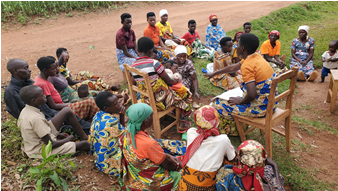
To address this challenge, Restoration Burundi is implementing an adult literacy program that offers a second chance to those who missed out on education during childhood. The initiative teaches reading, writing, and basic numeracy to adults who have lived for years with the burden of illiteracy. Recently, 22 learners graduated after successfully completing reading and writing assessments, becoming the third class to complete the program.
For Emelyne, a 30-year-old mother of three, the inability to read and calculate simple transactions often resulted in financial losses. Selling agricultural produce at local markets meant relying entirely on buyers to calculate payments.
Recalling those experiences, she explained that whenever she sold beans or maize, the buyer would weigh the produce, use a calculator, and hand her the money. Without being able to read numbers or verify the calculations, she had no way of knowing whether she had been paid fairly.
"When you get home, you find that you have been ripped off. This kind of ignorance was a big handicap to me."
Illiteracy also affected her spiritual life. As an active Christian, she sometimes had to participate in church services but could not read the Bible or written materials.
"I am a Christian and had to attend church or lead some services. Without being able to read was a big challenge. I thank you very much. God bless you for coming to teach us how to read and write. Now I can read well."
For Denise Nibaruta, 28, the inability to read was a source of embarrassment for many years. Born into a poor family, she started school but dropped out shortly afterwards because frequent illness and the lack of healthcare kept her from continuing her education.
One memory has remained vivid. When the man who later became her husband started courting her, she depended on friends to read his messages.
"My friends had to read all the messages he sent me. When I asked them to reply, they sent back the wrong messages and mocked me."
Today, she says learning to read has restored both her confidence and her independence. She no longer depends on others to communicate with her husband.

"I am thankful that you have taught us to read and write. It has started removing some barriers, especially talking to my husband. Now I personally can text him and he can reply. God bless you."
For Niyonkuru Nadine, 35, a mother of four, the roots of illiteracy lie in a painful childhood marked by tragedy and poverty. She explained that after her father died, her mother was raped during the crisis, and she was born without ever knowing her father.
"My mother was widowed during the crisis, and she was raped. That is how I was born, with no known father. My mother could not afford to send me to school."
Although her childhood denied her the opportunity to receive an education, she says the literacy class has given her a chance to begin a new chapter in life.
Another learner, Marie Chantal Nshimirimana, said she did not hesitate when she heard that Restoration Burundi was starting literacy classes in her community. She had waited many years for such an opportunity.
"I rushed to join when I heard about this program. We learned, and now I can read and write, whereas before I couldn't. Truly, well done."

Across Burundi, poverty remains one of the leading causes of school dropout, especially in remote communities where many families struggle to meet the most basic needs. While some of children continue to leave school every year, adult literacy programs offer hope to those whose childhood circumstances denied them an education.
With three graduating classes already completed and 22 new learners successfully finishing the latest course, Restoration Burundi hopes to expand the program to more underserved communities.


Comments